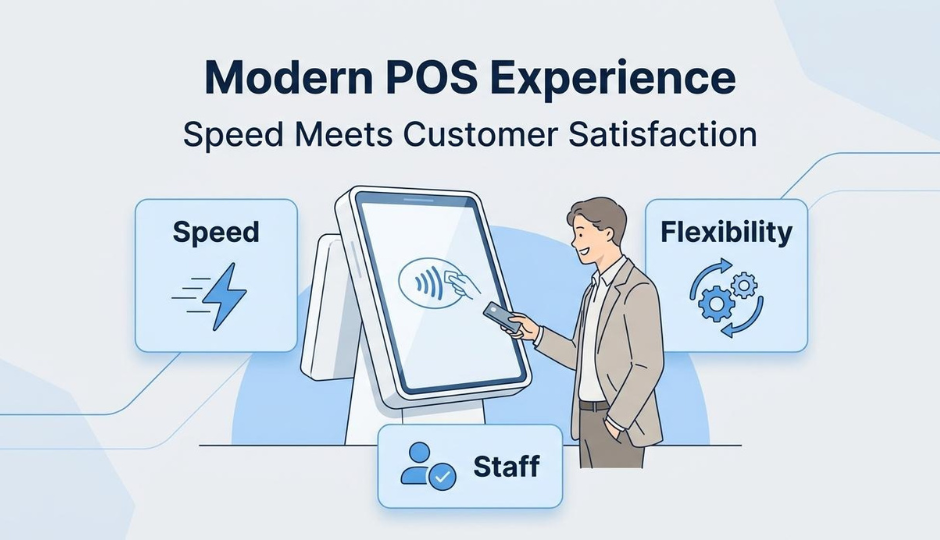
POS experience is the complete customer interaction at the point of sale, encompassing checkout speed, payment processing, staff engagement, and post-transaction touchpoints like returns and follow-ups.
This guide covers the meaning and revenue impact of POS experience, the core elements that define a great transaction, actionable strategies for enhancing every checkout moment, and the role unified commerce platforms play in connecting customer data across channels.
A strong POS experience starts with understanding what customers actually encounter at the register. Wait times exceeding six minutes, limited payment options, and undertrained staff all contribute to the 37% annual customer churn rate retailers face. The transaction moment carries outsized weight because it is where purchase commitment either solidifies or collapses.
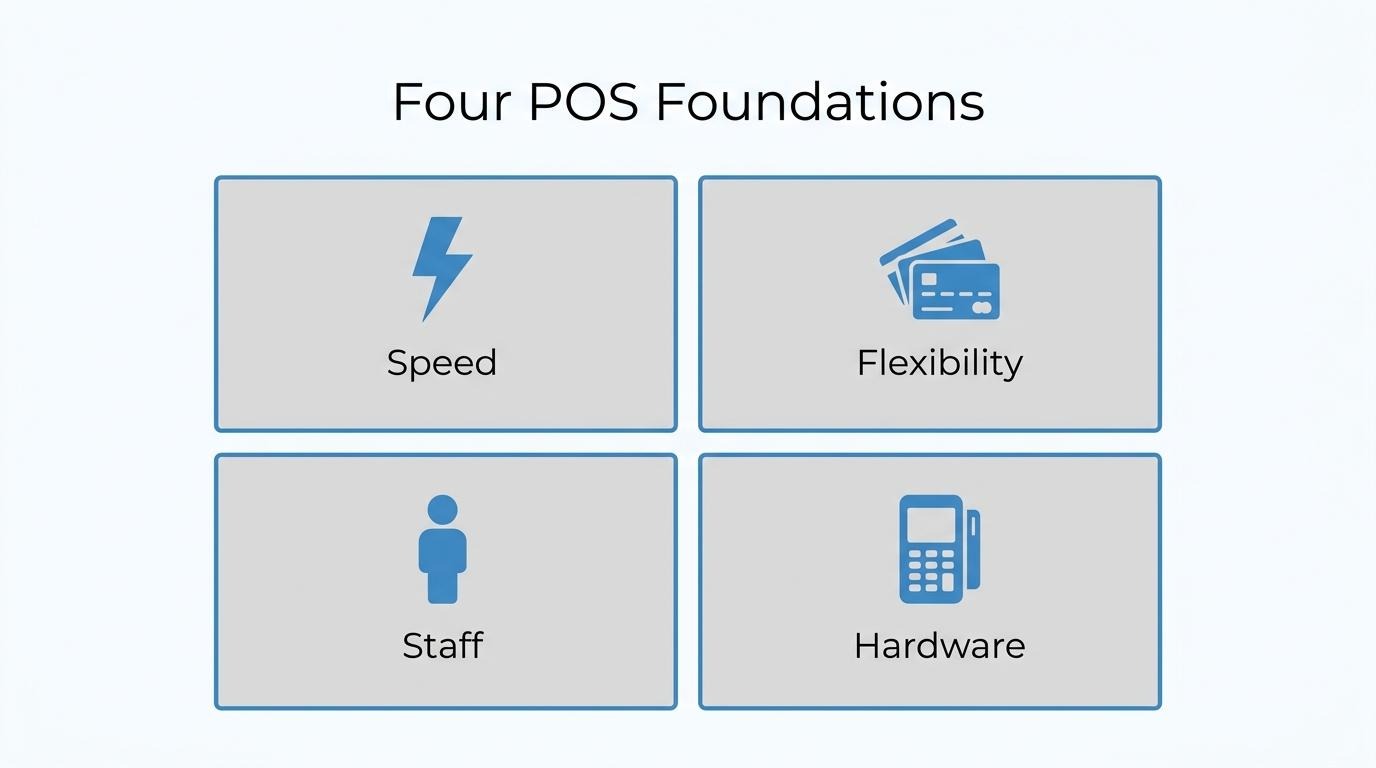
Four foundational elements determine checkout quality: speed, payment flexibility, staff interaction, and hardware reliability. When any one fails, the others cannot compensate. Customers who wait shorter than expected report substantially higher satisfaction, while 22% of shoppers abandon purchases entirely when the process feels complicated.
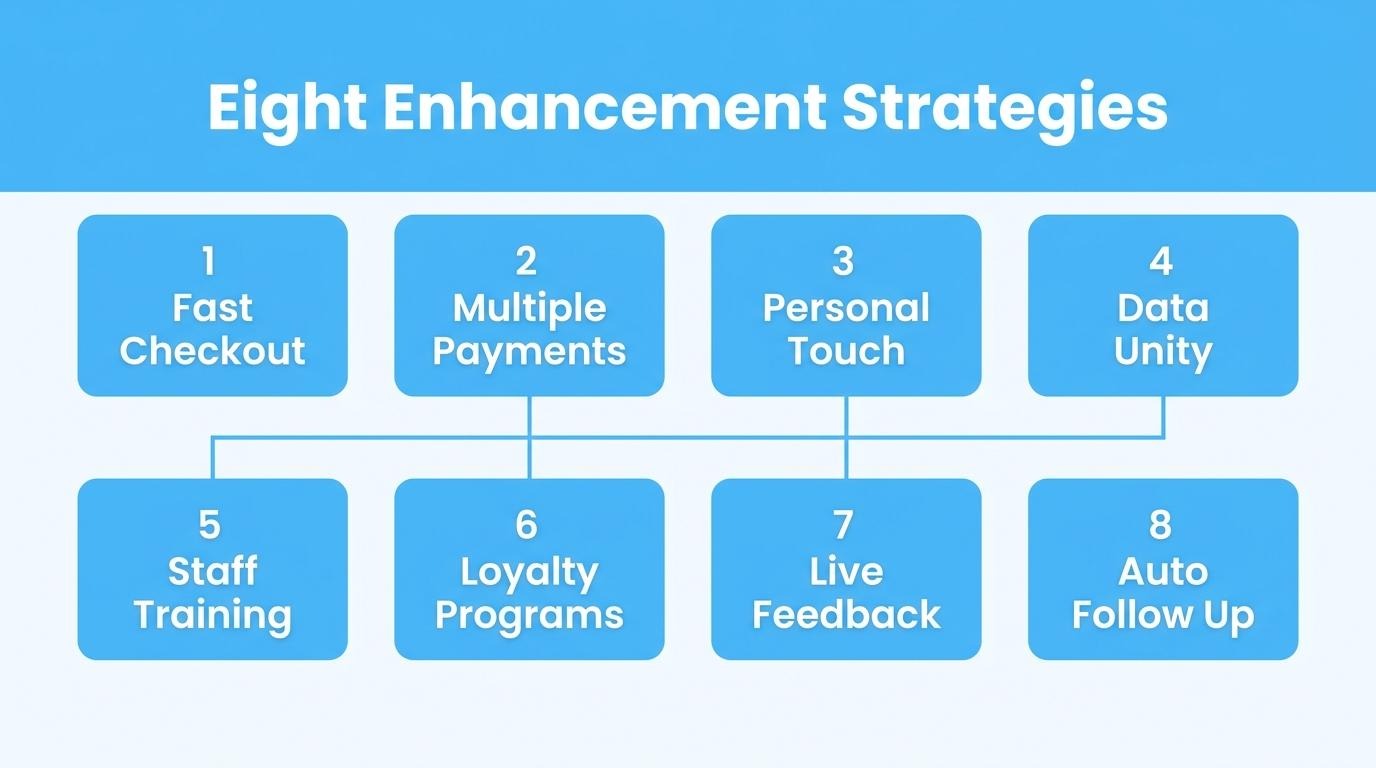
Eight specific strategies turn these foundations into competitive advantages. Streamlining checkout flow, accepting diverse payment methods (contactless, digital wallets, BNPL), personalizing register interactions, integrating cross-channel data, training staff thoroughly, embedding loyalty programs, collecting real-time feedback, and automating post-purchase communication each address a distinct friction point.
Modern POS software ties these strategies together through omnichannel integration, real-time inventory sync, and built-in CRM. Disconnected systems fragment customer records and make personalization impossible at scale. Unified platforms that consolidate in-store and online data into a single customer record eliminate blind spots, enabling consistent experiences that drive retention across every channel.
POS experience for retail customers means the complete interaction a shopper has at the point of sale, where a transaction is completed, payment is processed, and lasting brand impressions form. This encompasses speed, payment options, staff interaction, and post-transaction touchpoints like returns.
The point of sale is the time and place at which a retail transaction is completed, serving as the equivalent of a cash register where merchants calculate amounts owed and provide options for payment, according to the U.S. Small Business Administration. Yet for customers, the experience extends well beyond scanning items and tapping a card. It includes how long they wait, how flexible payment feels, how staff handle questions, and whether the process leaves them wanting to return.
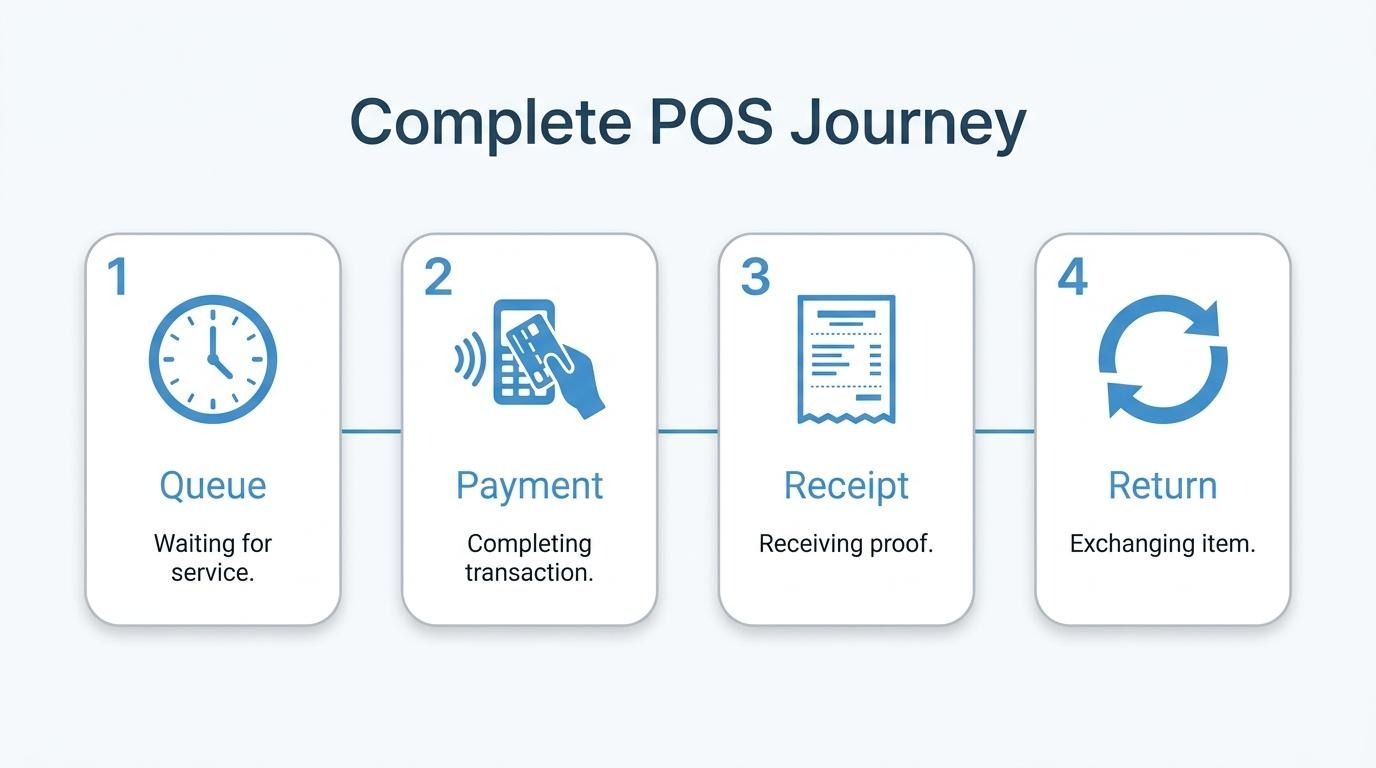
Average retail wait times in the US exceed 6 minutes, with 58% of customers leaving after five minutes if the queue does not move. That single friction point shapes whether a shopper becomes a repeat buyer or walks out empty-handed. Retail businesses lose about 37% of their customers annually, one of the highest global churn rates in any industry, and much of that attrition traces back to moments of frustration at checkout.
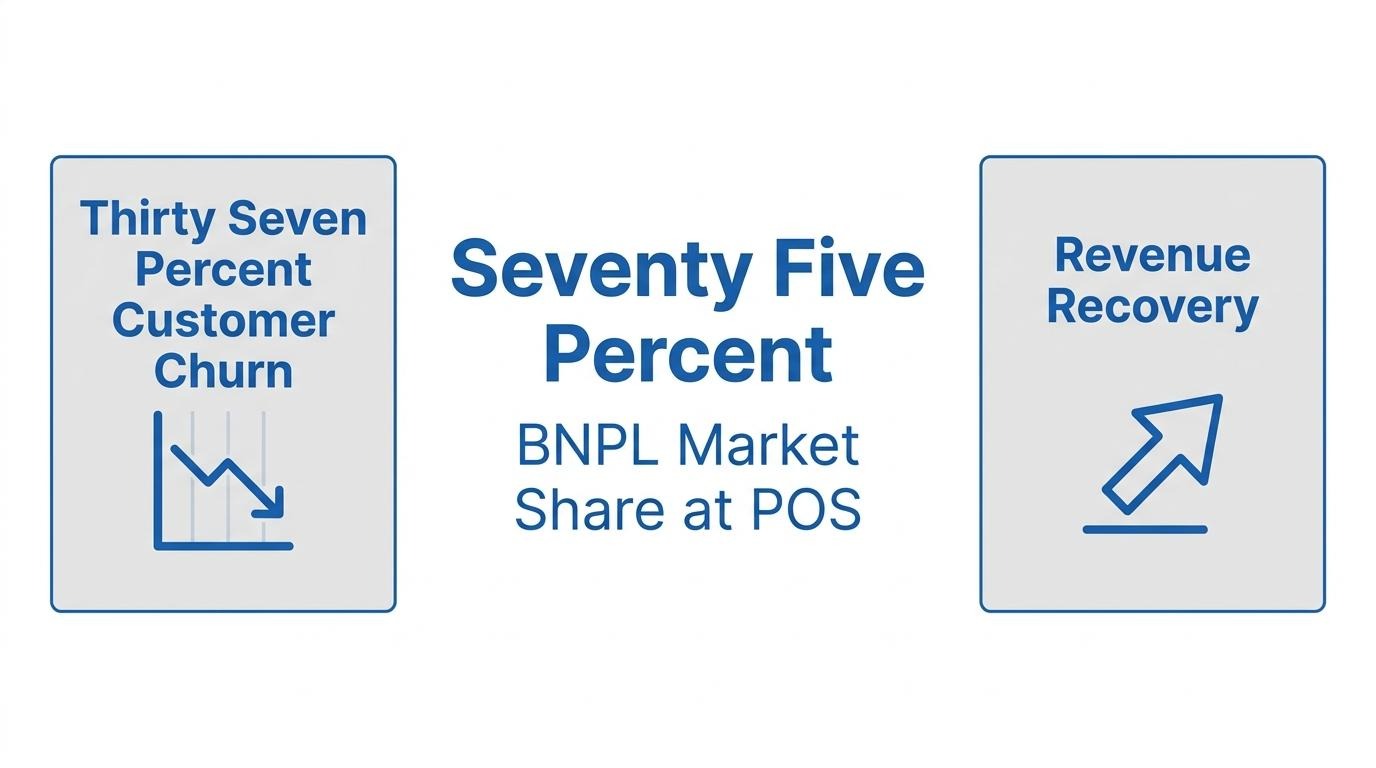
Even post-purchase interactions fall within the POS experience. As NRF Vice President Katherine Cullen states, "Returns are no longer the end point of a transaction; they provide an opportunity for retailers to create a positive experience for customers and can translate to brand loyalty." When the entire transaction arc feels seamless, from queue to payment to potential return, customers associate that ease with the brand itself.
For operators managing both online and physical storefronts, these checkout moments represent the highest-stakes touchpoint in the customer relationship. Understanding why the POS experience drives revenue is the next step toward building a strategy around it.
The point-of-sale experience matters for revenue because it sits at the exact moment a customer commits to spending. Friction at this stage directly causes lost sales, while a smooth transaction captures revenue that would otherwise disappear.
The POS channel's dominance in payment innovation illustrates its financial weight. According to a 2024 Yahoo Finance report, the point-of-sale channel accounts for 75.37% of Buy Now, Pay Later market revenue share, confirming that in-store and checkout-moment transactions drive the bulk of flexible-payment commerce.
For scaling retailers, this means every second of delay, every missing payment option, and every confusing interface at the register compounds into measurable revenue loss. Brands operating across online and physical channels face this pressure at both touchpoints simultaneously, making the checkout moment one of the highest-leverage areas for revenue recovery.
The key elements of a great POS experience are checkout speed, payment flexibility, staff interaction, and hardware reliability. Each shapes how customers perceive the transaction.
Checkout speed affects customer satisfaction directly: waiting shorter than expected substantially increases satisfaction scores, while waiting longer than expected decreases them. According to a Forrester study cited by Leverege, 85% of grocery consumers consider checkout speed "important," with half calling it "very important."
Minimizing queues through self-checkout technology and faster processing workflows proves crucial to enhancing the overall retail experience. When speed expectations are met or exceeded, shoppers associate that efficiency with the brand itself, not just the individual visit.
Payment flexibility shapes the POS experience by removing friction at the moment of commitment. Customers expect options:
According to Cheqly, almost 90% of US consumers have used contactless payment methods, and more than 60% of in-store transactions are projected to be contactless by 2025. Limiting accepted methods risks losing sales at the final step. For scaling retailers, the ability to support diverse payment preferences without juggling disconnected processors is where operational simplicity pays off.
Staff interaction influences the transaction by adding a human layer that technology alone cannot replicate. A knowledgeable associate who navigates the POS system confidently reduces perceived wait time and builds trust during the checkout moment.
Poorly trained staff, by contrast, create hesitation and errors that erode the speed advantages a fast system provides. The transaction becomes a brand impression; whether staff greet customers, answer questions, or handle exceptions smoothly determines if efficiency feels personal or mechanical.
Hardware reliability impacts the experience by determining whether speed and flexibility actually function under real conditions. A complicated checkout experience causes 22% of shoppers to abandon their carts, according to Swell, highlighting how even brief system hiccups create psychological friction that kills purchases.
Frozen screens, unresponsive card readers, and slow receipt printers transform a fast workflow into a frustrating bottleneck. Reliable POS hardware ensures that software-level optimizations translate into the smooth, predictable transactions customers expect every visit.
With these foundational elements in place, specific strategies can amplify each one further.
The 8 strategies to enhance the customer POS experience are streamlining checkout flow, offering multiple payment methods, personalizing interactions, integrating online and in-store data, training staff, implementing loyalty programs, collecting real-time feedback, and automating post-purchase follow-ups.
Streamlining the checkout flow reduces friction by eliminating unnecessary steps, reducing input fields, and minimizing decision points between item selection and payment completion. According to FullStory, for a business generating $10 million in annual revenue, even a modest 3–4% lift from targeted friction fixes could translate to hundreds of thousands in recovered revenue.
Effective streamlining tactics include:
For most retail environments, the checkout flow is where good experiences turn into abandoned transactions. Reducing even one unnecessary screen or tap compounds across thousands of daily transactions.
Offering multiple payment methods increases conversions by removing the barrier that occurs when a customer's preferred way to pay is unavailable. Currently, almost 90% of US consumers have used contactless payment methods, and more than 60% of in-store transactions are projected to be contactless by 2025, according to Cheqly.
Payment options that drive higher conversion rates include:
Limiting accepted payment types at checkout is one of the fastest ways to lose a ready-to-buy customer.
Personalizing interactions at the register builds loyalty by making customers feel recognized, valued, and understood at the moment of purchase. When staff can greet a returning customer by name, reference past purchases, or suggest complementary items based on buying history, the transaction shifts from routine to relational.
According to Emarsys, extensive personalization using the "best action" approach increases average revenue per user by 166%, based on IBM data. This level of personalization requires a POS system that surfaces customer profiles, purchase history, and preference data directly at the register, giving staff the context needed to tailor each interaction without slowing the transaction.
Integrating online and in-store data improves service by giving staff a complete view of each customer's history, preferences, and interactions regardless of where those touchpoints occurred. A unified data layer means an associate can see that a customer browsed specific products online, check real-time inventory across locations, and process returns for items purchased through any channel.
Key service improvements from integrated data include:
Without this integration, staff operate with blind spots that frustrate customers who expect seamless cross-channel recognition.
Training staff on POS software elevates engagement by ensuring associates can use the system's full capabilities during live customer interactions. According to Apoorva, training staff on a POS system boosts efficiency, reduces errors, enhances customer service, and maximizes system capabilities.
Undertrained staff default to basic transaction processing, missing features that create better experiences:
Confident staff who know their tools create faster, smoother interactions that customers notice immediately.
Implementing a loyalty program at POS drives repeat visits by creating an immediate, tangible incentive for customers to return. When enrollment and reward redemption happen at the register, participation requires zero extra effort from the customer.
Effective POS-integrated loyalty programs:
The point of sale is the highest-intent moment in the customer relationship. Capturing loyalty data here, rather than through a follow-up email days later, yields significantly higher enrollment rates.
Collecting real-time feedback at checkout reveals issues by capturing customer sentiment at the exact moment the experience is freshest. Short, post-transaction prompts on the POS terminal or receipt screen surface pain points before they become patterns that erode retention.
A 2025 Statista survey revealed that most online purchase returns were completed at home without issues, reflecting consumer preference for convenient, frictionless processes. This same expectation applies to feedback collection: if the mechanism adds friction, customers skip it.
Effective real-time feedback methods include:
Automating post-purchase follow-ups extends the experience by maintaining the customer relationship beyond the physical transaction. When the POS system triggers personalized emails, SMS messages, or app notifications based on what was purchased, the brand stays present during the product usage phase.
Automated follow-ups that strengthen retention include:
For scaling brands managing thousands of daily transactions, manual outreach is impossible. Automation tied directly to POS data ensures every customer receives timely, relevant communication without added operational load.
With these strategies in place, selecting the right POS software features makes execution possible.
Modern POS software should include omnichannel integration, real-time inventory synchronization, built-in CRM, analytics and reporting, mobile capability, and offline mode. According to Logic ERP, these features collectively define a comprehensive retail POS system in 2026. Beyond core transaction processing, the best systems unify in-store and online operations under a single data layer, eliminating the need to reconcile information across disconnected tools. For brands managing both physical and digital storefronts, prioritizing native integration over bolt-on apps reduces operational complexity and keeps customer records consistent across every touchpoint.
A disconnected POS hurts customer data and retention by creating fragmented records that prevent personalized engagement and consistent service across channels. This siloed architecture leads to blind spots in purchase history, failed loyalty tracking, and inconsistent experiences that drive customers away.
When point-of-sale systems operate independently from ecommerce and marketing tools, several problems compound:
Retail businesses lose about 37% of their customers annually, one of the highest churn rates in any industry. Much of that loss traces back to disconnected experiences where returning customers feel unrecognized. For brands operating at scale across multiple channels, these data gaps widen with every new touchpoint added to the stack.
The core issue is architectural. When POS, CRM, and marketing exist as separate systems reconciled through manual exports or middleware, the customer record fragments. A shopper who buys in-store on Saturday and browses online on Monday appears as two different people, making segmentation unreliable and retention campaigns generic rather than targeted.
For scaling brands already managing complexity across web, social, and physical retail, consolidating customer data into a shared layer eliminates these blind spots. SHOPLINE's unified commerce platform integrates inventory, marketing, and customer data across web, social media, and physical stores, resolving each interaction to a single customer record rather than scattering it across disconnected tools.
Understanding what unified data enables in practice clarifies why integration matters.
Unifying POS and online customer data in one system creates a single customer record that eliminates data silos between channels. The following sections cover how SHOPLINE approaches this consolidation and the key takeaways from this article.
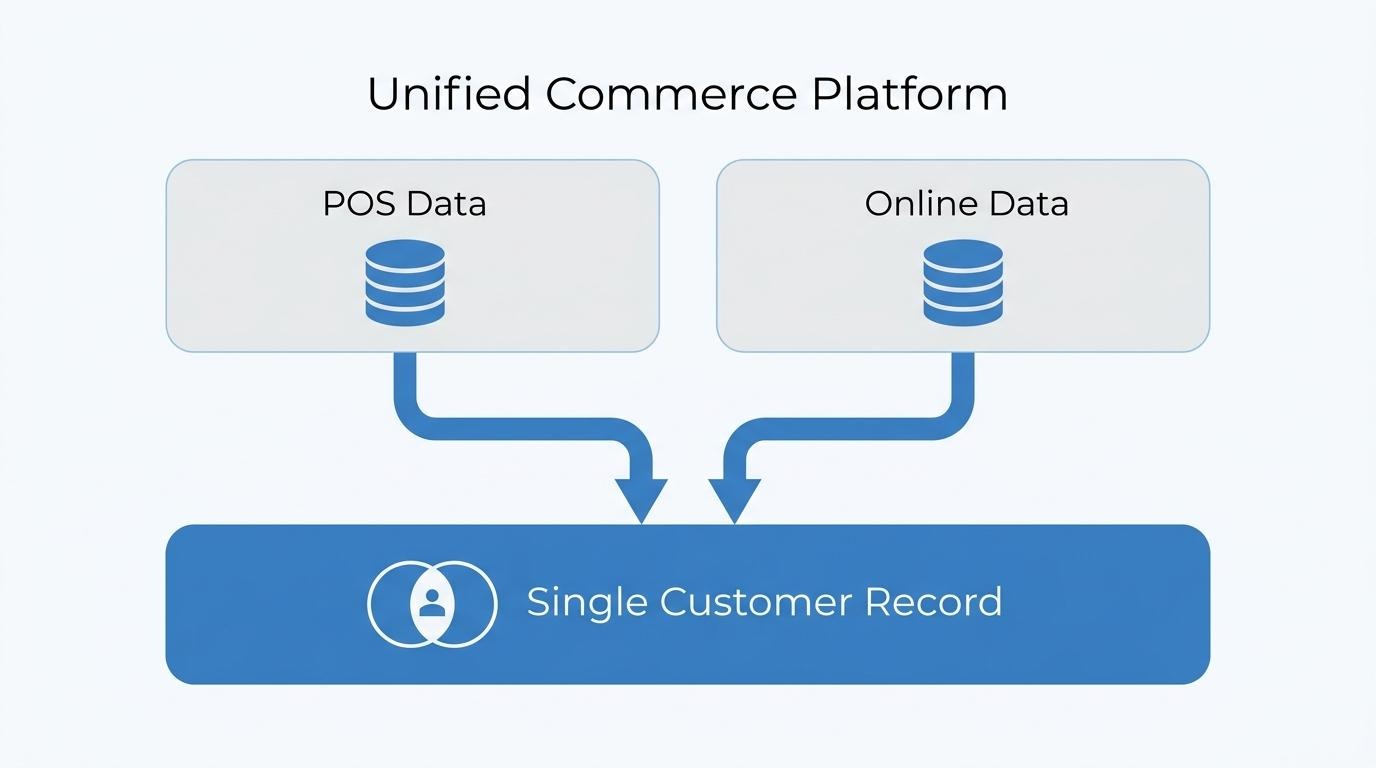
SHOPLINE unifies POS and ecommerce by housing commerce, CRM, marketing automation, and point-of-sale within a single platform that shares one customer data layer. Rather than reconciling separate tools for in-store transactions and online orders, every purchase, preference, and interaction resolves to the same customer record.
This architecture removes the sync failures that plague multi-app setups where a POS system feeds one database while the ecommerce platform feeds another. For brands operating at scale, consolidation means staff see complete purchase history at the register, loyalty points update instantly across channels, and lifecycle marketing triggers from unified behavioral data instead of fragmented snapshots.
The key takeaways about POS experience center on speed, flexibility, data unity, and staff capability as the foundations of customer retention.
According to the National Retail Federation, about 71% of consumers say they are less likely to shop with a retailer again after a poor experience, up from 67% in 2024. Every element of POS experience, from queue time to payment options to post-purchase follow-up, contributes to whether that customer returns.