Direct shipping is a fulfillment method where products move from the seller's own facility straight to the customer, bypassing third-party warehouses or intermediaries. Also called self-fulfillment, in-house shipping, or DTC fulfillment, this model places full operational ownership on the brand.
This guide covers how direct shipping works compared to other fulfillment models, its measurable advantages and disadvantages, which business verticals benefit most, cost structure and unit economics, and how unified commerce technology keeps the model sustainable at scale.
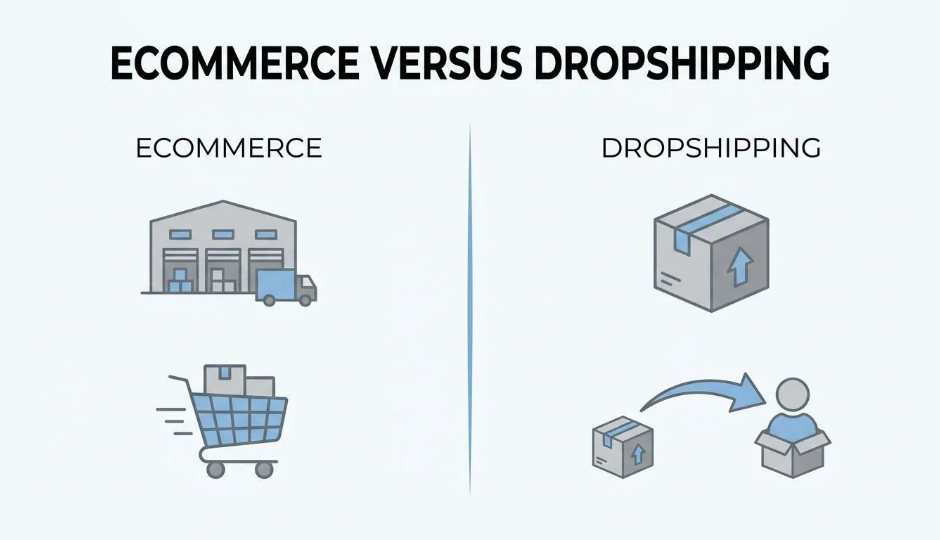
Direct shipping differs from drop shipping and third-party logistics in one critical way: the brand controls every fulfillment stage, from picking and packing to carrier handoff and delivery. Drop shipping eliminates inventory responsibility entirely, while 3PLs take over warehousing and fulfillment operations on the brand's behalf.
The advantages center on brand control, speed, and cost efficiency. In-house fulfillment lets brands design custom unboxing experiences, inspect products before shipment, and negotiate carrier rates directly. Local fulfillment positioning can reduce delivery costs significantly while keeping transit times competitive.
The disadvantages are equally concrete. Warehousing creates fixed overhead regardless of sales volume, geographic reach stays limited to owned facility locations, and inventory risk falls entirely on the brand. Scaling across wholesale, marketplace, and DTC channels fragments operations quickly without unified systems.
Fashion, beauty, food, and home goods brands gain the most from direct shipping when product handling, freshness standards, or packaging quality require hands-on oversight. Cost factors like storage rates, branded materials, shipping zones, and order volume each shape unit economics differently depending on scale.
Consolidating order, customer, and fulfillment data into a single platform like SHOPLINE eliminates the tool sprawl that erodes direct shipping's cost advantages as brands grow.
Direct shipping is a fulfillment method where products move from the seller's own facility straight to the customer. The subsections below clarify how it differs from drop shipping and third-party logistics, then outline the process step by step.
Direct shipping differs from drop shipping in who holds inventory and controls fulfillment. Direct shipping requires the seller to store, pick, pack, and ship products from its own warehouse, while drop shipping eliminates that responsibility entirely; the supplier ships directly to the customer on the seller's behalf.
According to Ship8, drop shipping is a fulfillment strategy in which businesses sell products without needing to keep items in stock or handle shipping themselves, as the manufacturer or supplier ships directly to the customer. In industry discourse, direct shipping is often used synonymously with "self-fulfillment," "in-house shipping," and "DTC fulfillment."
The core trade-off is straightforward: direct shipping gives you control over branding, packaging, and delivery speed, while drop shipping removes capital risk and warehousing overhead. For brands already generating meaningful revenue, the control that direct shipping provides tends to significantly outweigh the convenience of drop shipping, especially when customer experience is a competitive differentiator.
Direct shipping differs from third-party logistics in operational ownership. With direct shipping, the brand manages warehousing, inventory, picking, packing, and carrier relationships internally. A 3PL provider takes over that entire fulfillment process on the brand's behalf.
According to SEKO Logistics, 3PL providers are experts with the right tools, technologies, and infrastructure to handle receiving inventory, storage and control, picking, packing, shipping, delivery, and returns. This makes 3PLs particularly useful for brands that lack warehouse space or specialized fulfillment staff.
The decision often comes down to scale and priorities. Direct shipping suits brands that need granular quality control and a branded unboxing experience. A 3PL might suit brands prioritizing speed of geographic expansion over hands-on oversight.
The direct shipping process works by moving each order through a linear sequence of fulfillment stages, all managed in-house:
Each step stays closer to the brand's oversight, which is what separates this model from outsourced alternatives. Understanding this fulfillment flow makes it easier to evaluate the advantages and trade-offs covered next.
Depending on how it’s implemented, the main advantages of direct shipping can include stronger brand control, faster and simpler fulfillment flow, deeper customer relationships, lower per-order costs, and tighter quality oversight. The sections below break down each benefit.
Direct shipping gives you more control over branding by keeping every customer touchpoint, from packaging design to insert materials, under your team's direction. When you fulfill orders in-house, you choose the box, the tissue paper, the thank-you card, and any promotional inserts. No third-party warehouse decides how your product arrives.
This level of control matters more than most brands realize. Custom packaging reinforces brand identity at the exact moment a customer is most engaged: unboxing. Outsourced fulfillment partners might standardize packaging across clients, diluting what makes your brand distinct. Direct shipping eliminates that compromise entirely.
Direct shipping reduces the number of steps between order and delivery by eliminating extra redistribution layers and having fewer handoffs overall. In practice, this has the potential to improve speed and reduce delays.
Direct shipping strengthens customer relationships by creating a direct line between the brand and the buyer, with few to no intermediaries filtering the experience. You own the packaging, the delivery timeline, the tracking communication, and the return process. Each of these touchpoints is a chance to build trust.
When a third party handles fulfillment, issues like late deliveries or damaged goods reflect on your brand, yet you lack the visibility to prevent them. Direct shipping keeps accountability internal. You see the problem, fix the process, and communicate with the customer yourself. That feedback loop allows more control over turning one-time buyers into repeat customers than outsourced models allow.
Direct shipping can reduce per-order fulfillment costs by eliminating intermediary handling fees and enabling greater control over carrier negotiations, shipping zone optimization, and packaging spend. Shipping costs are primarily determined by the delivery zone relative to the fulfillment center, meaning that local fulfillment models, sometimes used within direct shipping models, position inventory closer to core customer demand and can significantly reduce per-package shipping rates. In addition, automated fulfillment workflows help lower costs by reducing fulfillment errors that contribute to returns, which account for roughly 23% of return cases. For scaling DTC brands, these efficiencies can compound materially across high order volumes.
Direct shipping improves product quality control by keeping inspection, packaging, and dispatch within your own operation. Your team handles every unit before it ships, catching defects, verifying quantities, and ensuring products meet your standards.
With outsourced fulfillment, quality checks depend on a partner's processes and staffing. Errors in picking or packing often go unnoticed until a customer complains. Direct shipping closes that gap. Internal teams can implement custom QC protocols specific to your product type, whether that means checking expiration dates on perishables or verifying color accuracy on apparel. This hands-on oversight can help protect your brand's reputation.
Understanding these advantages helps clarify which fulfillment challenges direct shipping solves and where its limitations begin.
The main disadvantages of direct shipping include higher warehousing costs, heavier operational demands, limited geographic reach, inventory risk, and difficulty scaling across channels.

Direct shipping increases warehousing costs because the brand owns or leases all storage infrastructure instead of sharing it across clients like a 3PL would. Rent, utilities, insurance, equipment, and warehouse management systems become fixed expenses regardless of order volume. Seasonal demand swings make this especially painful; you pay for peak-capacity space year-round even during slow months. For most growing DTC brands, warehousing represents the single largest cost of keeping fulfillment in-house.
Direct shipping requires more operational resources because the brand manages every fulfillment function internally, from receiving inventory and storage to picking, packing, shipping, and returns processing. Each of these steps demands dedicated staff, training, and oversight. Key resource demands include:
As noted by SEKO Logistics, in-house logistics means a company takes full responsibility for its warehouse management, shipping, transportation, and order fulfillment. This operational burden pulls focus from growth activities like product development and marketing, which is a trade-off many brands might underestimate until they are already committed.
Direct shipping limits geographic reach because orders typically ship from a single warehouse location or a small number of owned facilities. Shipping costs are determined by the delivery address zone relative to the fulfillment center, so customers farther from that origin pay more or wait longer. Brands operating one facility on the East Coast, for example, face steep zone-based surcharges on West Coast deliveries.
This single-origin constraint creates two problems:
Distributed inventory through 3PL networks solves this by placing stock closer to buyers, but that means relinquishing the very control that defines direct shipping.
Direct shipping creates inventory risk because the brand bears full financial responsibility for purchasing, holding, and managing stock. Unsold inventory ties up working capital. Overestimating demand leads to dead stock and markdowns; underestimating it causes stockouts and lost revenue. According to Kardex, poor inventory control is the single most cited challenge by professionals in warehouse management, at 62.3%. Without sophisticated demand forecasting and real-time inventory systems, discrepancies grow over time. Perishable or trend-driven categories like food, beverage, and fashion amplify this risk further, since products lose value rapidly if they sit unsold.
Direct shipping complicates scaling across channels because each new sales channel, whether wholesale, marketplace, or retail, introduces separate inventory allocation, order routing, and fulfillment workflows that a single in-house operation must absorb. Inventory visibility fragments when online, retail POS, and marketplace orders draw from the same stock without a unified system reconciling them in real time.
Common scaling complications include:
Brands selling through multiple channels while fulfilling everything in-house often discover that operational complexity grows faster than revenue. Consolidating order, inventory, and customer data into a single platform becomes critical at that stage.
The businesses that might benefit most from direct shipping can include DTC e-commerce brands, mid-to-high AOV brands, brands with geographically concentrated demand, brands with large or complex product catalogs, subscription and repeat purchase brands, and fast scaling brands. In practice, many of these brands are those selling branded, perishable, or experience-driven products.
Direct shipping works for fashion and apparel brands by giving them full control over presentation, quality checks, and seasonal inventory timing. Branded tissue paper, custom inserts, and curated packaging create an unboxing experience that reinforces brand identity at the moment of delivery.
Apparel brands also benefit from inspecting garments before shipment, catching sizing inconsistencies or fabric defects that would otherwise drive returns. For brands running frequent drops or limited-edition collections, in-house fulfillment allows rapid inventory rotation without waiting on third-party warehouse processing queues. This level of control is especially valuable for scaling DTC apparel labels where repeat purchase rates depend heavily on first-impression quality.
Direct shipping works for beauty and skincare brands by enabling more precise handling of temperature-sensitive formulations and fragile packaging. Many serums, creams, and liquid products require careful pick-and-pack processes that generic fulfillment warehouses may not prioritize.
Influencer-driven beauty brands face a particular challenge: demand spikes that arrive with little warning. According to Capacity, a logistics provider, influencer-driven beauty brands often require specialized fulfillment to scale into major retailers like Ulta during demand surges. Controlling fulfillment in-house lets these brands respond to viral moments without relying on a third party's capacity constraints. For brands building subscription boxes or curated sample kits, direct shipping also simplifies the assembly of multi-SKU orders with personalized touches.
Direct shipping works for food and beverage brands by keeping cold chain integrity, freshness standards, and compliance with food safety regulations vertically integrated throughout fulfillment. Perishable goods demand stringent fulfillment workflows, including temperature monitoring, expiration date rotation, and insulated packaging.
This category is expanding rapidly. According to a 2024 NielsenIQ analysis, rapidly rotating categories including food, beverage, household, and beauty products now account for an average of 20% of e-shoppers' spending. Brands shipping artisanal foods, meal kits, or beverages directly can control shelf-life management and packaging quality in ways outsourced fulfillment cannot match. For food brands experiencing viral growth on social platforms, in-house fulfillment provides the agility to scale without compromising product integrity.
Direct shipping works for home goods brands by reducing damage rates on oversized, fragile, or irregularly shaped products. Ceramics, glassware, furniture, and décor items require custom packaging solutions that standard fulfillment centers may not offer.
Controlling the packing process means home goods brands can engineer protective inserts, use brand-consistent materials, and inspect each item before it ships. This matters because damage claims on heavy or breakable items erode margins quickly. Brands selling handmade or artisan products also benefit from the ability to include personalized notes or care instructions. For home goods brands scaling across DTC and wholesale channels, direct shipping provides the flexibility to fulfill each channel's packaging and labeling requirements from a single operation.
With the right verticals identified, understanding the cost structure behind direct shipping helps brands plan their fulfillment budgets accurately.
The key cost factors in a direct shipping model include warehousing, packaging, carrier rates, and order volume. Each factor shapes unit economics differently depending on brand scale and fulfillment strategy.
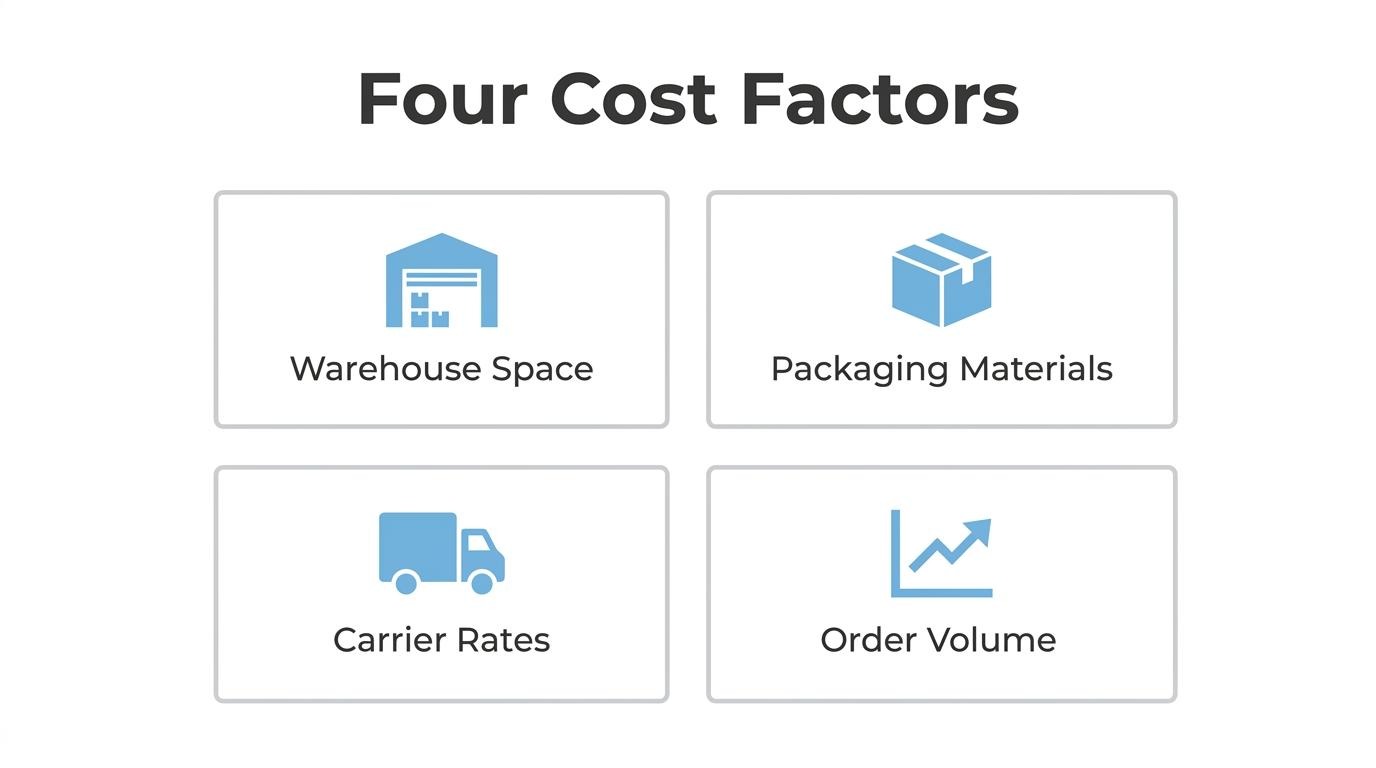
Warehousing and storage costs affect direct shipping by creating fixed overhead that persists regardless of sales volume. Brands must pay for facility leases, climate control, labor, and inventory management systems. Storage remains one of the largest line items for brands managing their own fulfillment. Underutilized warehouse space during slow seasons still carries cost, which makes accurate demand forecasting essential for keeping warehousing expenses aligned with revenue.
Packaging and branded materials affect costs by adding per-unit expense for custom boxes, inserts, tissue, tape, and printed materials. These costs scale linearly with order volume. However, the investment often pays for itself through stronger retention. According to 105 Packaging, 47% of customers who receive branded packaging make repeat purchases within six months, compared to 30% who receive plain packaging. For scaling DTC brands, branded packaging is less of a discretionary cost and more of a retention lever; the per-unit increase is modest relative to the lifetime value it protects.
Carrier rates and shipping zones affect costs by creating variable per-order expenses based on package weight, dimensions, and destination distance. Shipping zones measure the distance between a fulfillment center and the delivery address. Higher zones mean higher rates. A brand shipping from a single East Coast warehouse to California pays significantly more per package than one shipping to a neighboring state. Negotiating volume-based carrier contracts and strategically locating fulfillment centers closer to customer clusters are two practical ways to reduce zone-related costs.
Order volume affects direct shipping costs by determining how much leverage a brand has over per-unit pricing. Higher volumes usually unlock discounted carrier rates, bulk packaging pricing, and better warehouse space utilization. Conversely, low-volume brands absorb disproportionately high fixed costs per order. At scale, the average pick and pack price cost becomes a smaller fraction of revenue. Brands operating below a critical volume threshold often find that outsourcing to a 3PL delivers better unit economics than running direct fulfillment internally.
With cost factors mapped, the next step is deciding which fulfillment model fits your business.
You decide between direct shipping and other models by weighing control, cost, and scalability against your current order volume and operational capacity. In addition to direct shipping, brands may also use third-party logistics (3PL) providers, hybrid fulfillment strategies, marketplace fulfillment (where platforms like Amazon handle storage and delivery), or ship-from-store models that leverage retail locations as fulfillment nodes. The following sub-sections break down when direct shipping, third-party logistics, or a hybrid approach fits best.

Brands should choose direct shipping over dropshipping when control over brand experience, product quality, and fulfillment reliability matters more than minimizing upfront investment. In a direct shipping model, the company manages order fulfillment either in-house or through a logistics partner, maintaining control over inventory, packaging, and delivery standards. Dropshipping reduces operational overhead by outsourcing these responsibilities to suppliers, but limits control over packaging, shipping timelines, and product quality assurance.
Direct shipping is the stronger choice when:
Drop shipping works better for testing new product lines or entering markets with minimal capital risk. However, for brands already generating steady revenue and prioritizing retention, owning the fulfillment process protects the customer relationship in ways drop shipping simply does not.
Third-party logistics (3PL) is a fulfillment model that can be used within direct shipping where brands outsource warehousing, inventory management, and order fulfillment to a specialized logistics provider. Brands should consider third-party logistics when order volume outpaces warehouse capacity or when geographic reach becomes a bottleneck, such as expansion into new regions creating shipping inefficiencies. A 3PL distributes inventory across multiple fulfillment centers, reducing shipping zones and transit times without requiring you to lease additional facilities. This allows brands to scale operations and improve delivery performance without managing logistics infrastructure in-house.
3PL makes sense when:
The trade-off is reduced control over packaging, quality checks, and delivery branding. For brands where those elements are non-negotiable, direct shipping remains preferable despite the higher operational burden.
In-house logistics is a fulfillment model that can be used within direct shipping where a company manages its own warehousing and order fulfillment operations. While direct shipping describes the flow of goods from the fulfillment point to the customer, in-house logistics defines who is responsible for executing that process. According to SEKO Logistics, In-house logistics means that a company takes full responsibility for warehouse management, inventory, shipping, and order fulfillment.
Distributed inventory models are fulfillment strategies that improve direct-to-customer shipping efficiency by spreading stock across multiple locations instead of relying on a single warehouse. When an order is placed, it is automatically routed to the nearest or most efficient fulfillment center based on inventory availability and customer location. These models are commonly supported through third-party logistics providers (3PLs) as well as brand-operated warehouse networks.
A hybrid fulfillment strategy makes sense when a single model cannot serve all your product lines, channels, or customer segments efficiently. Many scaling brands handle core SKUs through their own warehouse while routing overflow, seasonal inventory, or remote-region orders through a 3PL.
Common hybrid scenarios include:
A 2025 Ryder ecommerce study found that 94% of shoppers prioritize cost savings and flexibility over delivery speed, with fast shipping expectations of two days or less dropping to just 15%. This gives hybrid operators room to optimize fulfillment routing by cost rather than speed alone. For brands managing both online and in-store channels, consolidating order and customer data into one system keeps hybrid operations from fragmenting across disconnected tools.
You set up a direct shipping operation by securing warehouse space, deploying order and inventory management technology, and selecting shipping carriers. The subsections below cover infrastructure, technology, and carrier selection.
The warehouse infrastructure you need includes dedicated storage space, packing stations, and organized inventory zones. At minimum, a direct shipping warehouse requires shelving or racking systems for SKU organization, a designated pick-and-pack area with packing materials, and a shipping station where labeled orders stage for carrier pickup.
Climate control matters for temperature-sensitive products like food, beverages, or skincare. Layout efficiency directly affects pick speed and order accuracy, so mapping product velocity to bin placement reduces unnecessary movement. For brands processing fewer than 100 orders per day, a small leased warehouse or shared space often works. Higher volumes typically demand purpose-built facilities with loading docks and conveyor systems. Investing in the right physical setup early prevents costly retrofits as order volume scales.
The technology you need to manage orders and inventory includes a warehouse management system (WMS), an order management system (OMS), and real-time inventory tracking software. These tools automate order routing, stock updates, and fulfillment reporting.
Inventory discrepancies between physical and recorded stock levels are a primary source of operational inefficiency in warehouse management. A WMS helps eliminate much of this gap by syncing counts automatically after each pick, receipt, or return. Barcode or RFID scanning at the shelf level adds another accuracy layer. For brands running high SKU counts or selling across multiple channels, consolidating order and inventory data into one system prevents the fragmentation that can slow operational efficiency.
You choose shipping carriers for direct fulfillment by comparing transit times, zone-based pricing, service reliability, and package size compatibility across multiple providers.
Key factors to evaluate when selecting carriers include:
Negotiating volume-based discounts with two or three carriers gives you rate leverage and backup options if one provider experiences service disruptions. With carriers and technology aligned, the operational foundation supports a consistent customer experience.
Direct shipping can influence customer experience and retention by improving fulfillment consistency, enabling better packaging control, and supporting real-time order visibility. When combined with optimized inventory placement and logistics systems, it can also contribute to faster delivery times, which may encourage repeat purchases. The subsections below explore how delivery speed, branded packaging, and tracking transparency can impact customer satisfaction and loyalty.
Faster delivery impacts repeat purchase rates by reducing the gap between order placement and product use, which reinforces positive buying behavior and encourages reorders. When customers receive orders quickly, satisfaction rises and the likelihood of a second purchase increases measurably.
That said, speed alone is not always the deciding factor. According to a 2025 Ryder E-Commerce Study, 94% of shoppers prioritize cost savings and flexibility over delivery speed, with fast shipping expectations of two days or less dropping to just 15%. This suggests brands running direct shipping should balance transit time with affordable shipping options rather than chasing speed at any cost. Offering predictable, reliable delivery within a reasonable window often does more for retention than overnight fulfillment that inflates cart totals.
Branded unboxing influences customer loyalty by transforming a routine delivery into a memorable brand interaction. Custom packaging, tissue paper inserts, and branded tape create a tactile experience that reinforces identity and perceived value.
According to a survey reported by 105 Packaging, 47% of customers who receive branded packaging make repeat purchases within six months, compared to 30% who receive plain packaging. That 17-point gap makes a strong case for investing in packaging design as a retention lever, not just a cost center. For brands managing their own fulfillment, this is one of the clearest advantages over drop shipping or third-party models where packaging control is limited or nonexistent.
Real-time order tracking builds buyer confidence by eliminating uncertainty between checkout and doorstep delivery. Customers who can monitor shipment progress experience fewer "where is my order" inquiries, which reduces support volume and increases trust.
Investing in fulfillment software allows companies to automate tracking, inventory replenishment, and reporting to maintain high order accuracy rates. Automated tracking notifications, including shipping confirmation, transit updates, and delivery alerts, keep buyers informed without requiring them to reach out. This transparency signals operational competence and professionalism.
For brands scaling direct shipping, integrating order tracking into the post-purchase flow is one of the simplest ways to reduce friction and build the kind of confidence that turns first-time buyers into repeat customers.
You manage direct shipping without tool sprawl by consolidating order, customer, and fulfillment data into a single platform instead of stitching together separate apps. The following sections cover what changes with unified data and the key takeaways from this article.
What changes is operational visibility, cost efficiency, and execution speed. When order processing, customer records, and fulfillment workflows share one data layer, inventory discrepancies shrink because physical counts stay synchronized with recorded levels in real time. Pick, pack, and ship sequences can be managed from a single source of truth rather than needing to manually reconcile data from separate systems.
On SHOPLINE, order management, CRM, and fulfillment data live in a centralized platform. This removes the sync failures that typically surface when brands connect separate OMS, WMS, and marketing tools through middleware. For high-volume brands where per-order pick-and-pack costs add up quickly, reducing data handoff errors between systems can help protect margins by preventing costly fulfillment mistakes.
What Are the Key Takeaways About Direct Shipping Pros and Cons We Covered?
The key takeaways about direct shipping pros and cons are:
For scaling DTC brands, the decision is rarely direct shipping versus outsourcing entirely. The practical path is choosing the fulfillment model that matches current volume, then building on infrastructure that keeps data unified as complexity grows.